What is Arthritis? Symptoms, Causes, and Easy Treatment Guide (Beginner-Friendly)
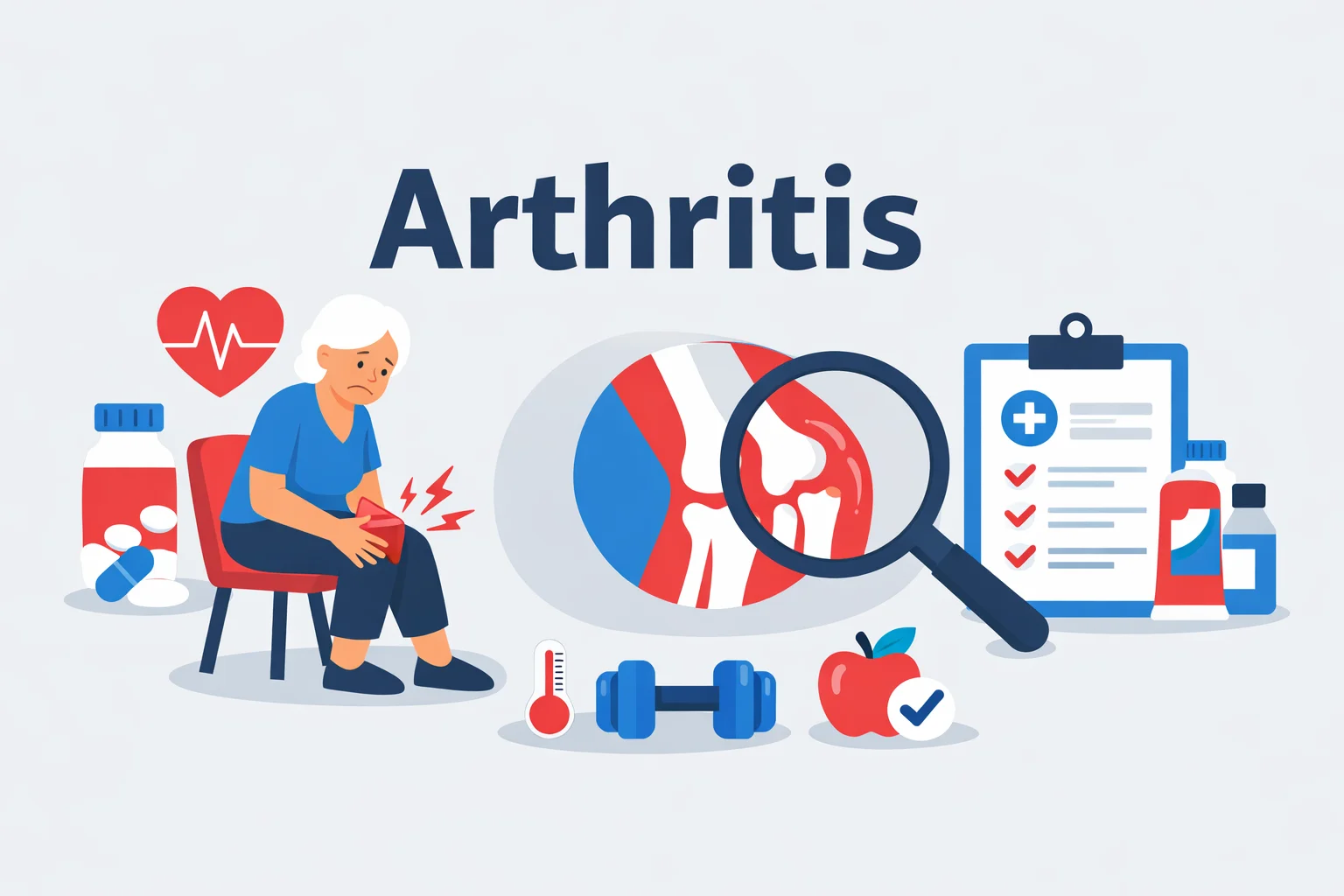
If you feel pain in your knees when standing up, or stiffness in your fingers when you wake up in the morning, you are not alone. Many people experience these problems, especially as they grow older. One common reason behind this discomfort is a condition called Arthritis.
In simple words, arthritis is a problem in your joints — the parts of your body that help you move, like knees, elbows, and fingers. When these joints become swollen or stiff, even small daily tasks like walking, climbing stairs, or holding a cup can become difficult.
Think of your joints like the hinges of a door in your house. When the hinge is smooth, the door opens easily. But when it becomes rusty, it makes noise and becomes hard to move. Arthritis works in a similar way.
In this guide, you will learn what arthritis is, why it happens, and how you can manage it in simple and practical ways.
What is Arthritis?
Arthritis is a condition where your joints become painful, stiff, or swollen. Joints are the parts of your body where two bones meet, like your knees, elbows, fingers, and shoulders.
Think of your house door again. When the hinge is new, the door opens smoothly. But if it becomes rusty or damaged, it becomes hard to open and may make noise.
Your joints work the same way. Healthy joints allow smooth movement, while affected joints cause pain, stiffness, and difficulty in movement. Because of this, simple daily activities become harder, such as sitting, standing, climbing stairs, or holding objects.
Some people feel pain occasionally, while others may feel it daily depending on the severity of the condition.
Which Body Parts Are Affected
Arthritis can affect many parts of the body, but some areas are more commonly affected.
The most common joints include knees, hands, hips, and the back. Knee pain often appears while walking or climbing stairs. Hand and finger pain can make it difficult to hold objects. Hip pain affects sitting and standing, while back stiffness reduces overall movement.
In daily life, you may notice an older family member taking extra time to stand up or feeling discomfort while walking. These are common signs of joint problems.
Types of Arthritis
Osteoarthritis (Most Common)
Osteoarthritis is the most common type of Arthritis. It usually happens due to wear and tear over time.
Inside your joints, there is a soft cushion that helps smooth movement. As a person ages or uses joints heavily, this cushion becomes thin. As a result, bones start rubbing against each other, causing pain and stiffness.
This condition is common in knees, hips, and hands. For example, someone who has done physical work for many years may feel knee pain due to this wear and tear.
Rheumatoid Arthritis
Rheumatoid arthritis is different from osteoarthritis. It happens when the body’s immune system attacks its own joints by mistake.
This leads to swelling, pain, and joint damage over time. It can affect younger people and often impacts both sides of the body, such as both hands or both knees.
Other Types
There are other types of arthritis as well. Gout occurs when uric acid builds up in the joints and causes sudden pain, often in the big toe. Psoriatic arthritis is linked with a skin condition and causes both skin and joint problems.
Symptoms of Arthritis
Common symptoms of Arthritis include joint pain, swelling, stiffness, reduced movement, and sometimes warmth around the joints.
Common Symptoms Explained
Joint pain can be mild or severe and may increase with movement. Swelling makes the joint appear larger than usual. Stiffness is especially common in the morning and improves gradually after movement.
Reduced movement makes it difficult to fully bend or stretch joints. Many people feel their joints are tight or locked after waking up.
Early Warning Signs
Early signs include mild pain that comes and goes, slight stiffness after sitting for long periods, and difficulty with small tasks like holding a cup or opening a jar.
These signs are often ignored, but early care can prevent the condition from becoming worse.
Causes of Arthritis
Aging
Aging is one of the main causes of Arthritis. Over time, joints wear out due to continuous use.
Just like an old hinge becomes rough, joints also lose their smoothness, leading to pain and stiffness.
Injury or Overuse
Past injuries or long-term physical work can damage joints. Repeated movements or heavy lifting can slowly weaken joint structures.
For example, a worker who lifts heavy objects daily may develop joint pain later in life.
Genetics
Arthritis can run in families. If parents or grandparents had joint problems, the chances may increase for the next generation.
Immune System Issues
In some cases, the immune system attacks the joints instead of protecting the body. This leads to inflammation and long-term joint damage.
How Arthritis Affects Daily Life
Arthritis affects more than just joints. It changes daily routines and reduces comfort.
Movement becomes difficult. Walking, climbing stairs, and standing up require more effort. Daily tasks like holding a cup, opening containers, or using a phone may become painful.
Pain can also disturb sleep, leading to tiredness. Over time, people may feel frustrated and depend on others for help with simple tasks.
This affects both physical and emotional well-being.
You May Also Read It : Goutabio
How to Diagnose Arthritis
Doctor Checkup
A doctor will first examine your joints and ask about your symptoms. They check movement, swelling, and pain level.
They may ask when the pain started, how often it occurs, and whether it affects one or multiple joints.
Tests
Doctors may suggest tests like X-rays to see bone condition or blood tests to check inflammation.
These tests help confirm the type and severity of arthritis.
Early diagnosis helps prevent further damage and improves treatment results.
Treatment of Arthritis
Treatment of Arthritis focuses on reducing pain and improving movement.
Medicines
Doctors may prescribe pain relievers and anti-inflammatory medicines. These help reduce swelling and discomfort.
Medicines should always be taken under medical guidance.
Exercise
Light exercise keeps joints flexible and reduces stiffness. Activities like walking and stretching are helpful.
Regular movement keeps joints active and prevents them from becoming stiff.
Home Remedies
Warm compress, warm baths, and proper rest can reduce pain and relax joints.
Lifestyle Changes
Maintaining a healthy weight reduces pressure on joints. Avoiding long sitting and improving posture also helps.
With regular care, many people manage arthritis effectively.
Best Home Tips to Reduce Pain
Simple habits at home can help manage Arthritis.
Use warm therapy to relax joints. Keep moving gently to avoid stiffness. Maintain proper posture to reduce pressure. Use support tools like comfortable shoes or walking sticks if needed.
Balance rest and activity. Too much rest increases stiffness, while too much activity increases pain.
Consistency is the key to long-term relief.
Foods That Help Arthritis
Diet plays an important role in joint health.
Healthy foods include fruits, vegetables, fish, nuts, and plenty of water. These help reduce inflammation and support joints.
Avoid sugary, fried, and processed foods as they increase inflammation and worsen symptoms.
A balanced diet supports better joint function over time.
Can Arthritis Be Cured?
Arthritis usually cannot be completely cured, but it can be managed effectively.
With proper care, treatment, and lifestyle changes, people can reduce pain and improve movement.
Early care leads to better results and prevents complications.
When Should You See a Doctor?
You should see a doctor if pain lasts for a long time, swelling does not reduce, or movement becomes difficult.
Sudden severe pain, redness, or inability to move a joint requires immediate attention.
Early medical care prevents long-term damage and improves quality of life.
Conclusion
Living with Arthritis may feel challenging, but it is manageable with the right approach.
By staying active, eating healthy, maintaining posture, and seeking timely medical advice, you can reduce pain and improve your daily life.
Small daily habits make a big difference. With consistency and care, it is possible to live a comfortable and active life even with arthritis.
Frequently Asked Questions
1 – What is arthritis in simple words?
Arthritis is a condition where joints become painful, stiff, or swollen, making movement difficult.
2 – Is arthritis dangerous?
It is not usually life-threatening but can affect daily life if not managed properly.
3 – Can young people get arthritis?
Yes, some types can affect younger individuals due to immune or genetic factors.
4 – What is the main cause of arthritis?
Common causes include aging, injury, genetics, and immune system issues.
5 – How can I reduce arthritis pain at home?
Use warm compress, exercise lightly, maintain posture, and follow a healthy lifestyle.
6 – Which food is best for arthritis?
Fruits, vegetables, fish, and nuts are beneficial for joint health.
7 – Is walking good for arthritis?
Yes, light walking helps keep joints flexible and reduces stiffness.
8 – Can arthritis go away on its own?
No, but it can be managed with proper care and treatment.