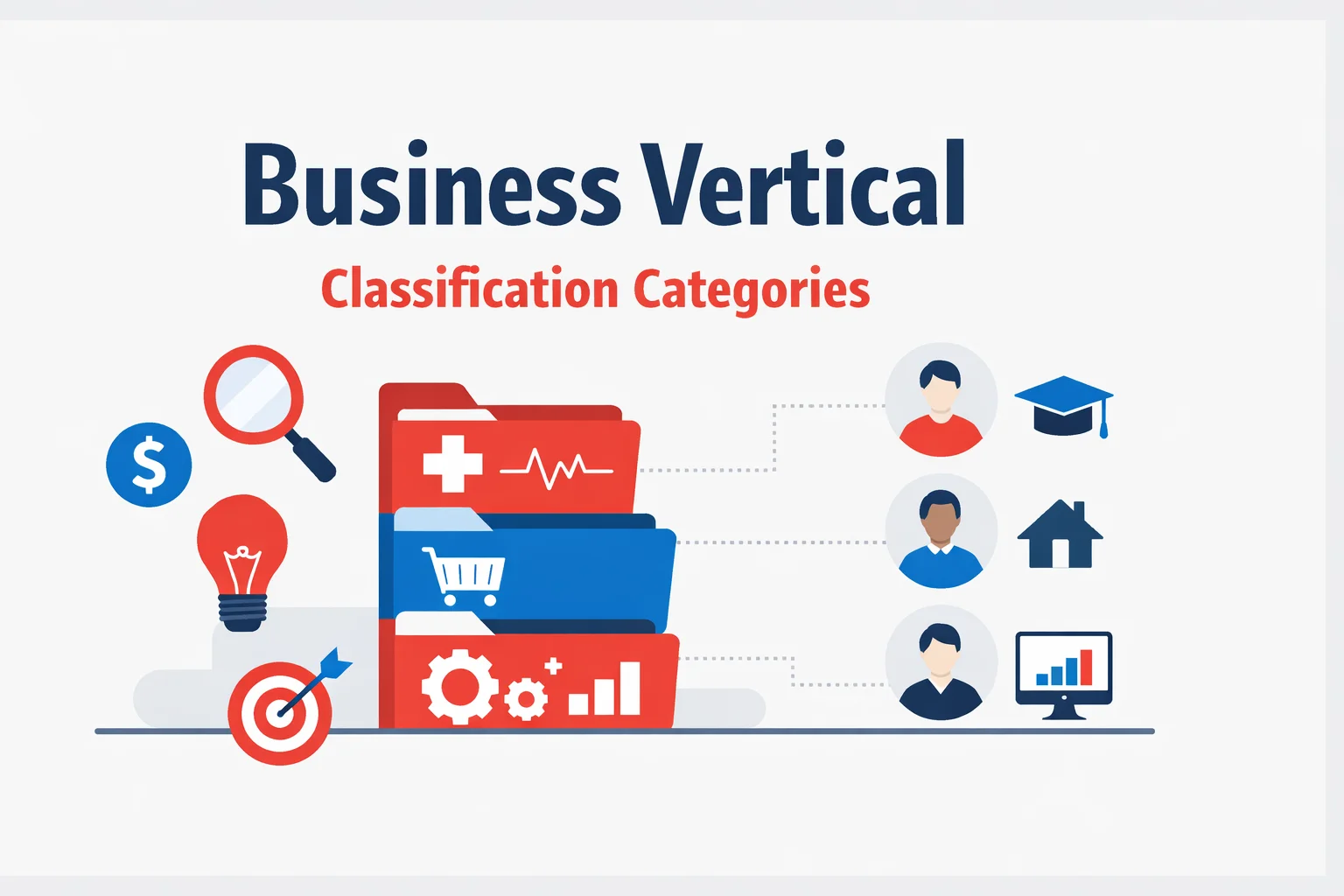
Business Vertical Classification Categories: A Simple Guide with Examples and SEO Use
Introduction
The term business vertical classification categories may seem complex at first, but it is actually easy to understand. In simple terms, it refers to how businesses are grouped based on the type of products or services they offer.
Just like different rooms in a house serve different purposes, businesses operate in different areas called verticals. These verticals are then organized into classification categories to make understanding and management easier.
This guide explains the concept clearly, with examples and practical use in SEO and digital marketing.
What Is a Business Vertical?
Simple Definition
A business vertical is a specific industry or sector where a business operates. It defines the main area of work of a company.
Real-Life Example
| Room | Purpose | Business Vertical |
|---|---|---|
| Kitchen | Cooking | Food Industry |
| Study Room | Learning | Education |
| Garage | Parking | Automobile |
In the same way that rooms organize a house, business verticals organize industries.
What Are Classification Categories in Business?
Simple Meaning
Classification categories are systems used to group businesses based on industry, products, services, and target audience.
Why Classification Is Important
Classification helps businesses understand their position, target the right audience, improve marketing strategies, and organize data more effectively. It also supports SEO by making content more structured and relevant.
Types of Business Vertical Classification Categories
Main Industry Categories
Some common business vertical classification categories include:
- Healthcare
- Finance
- Retail
- Technology
- Education
- Real Estate
These categories represent major areas of economic activity.
Sub-Categories and Niches
Each vertical contains smaller groups known as sub-categories or niches.
| Vertical | Sub-Categories |
|---|---|
| Healthcare | Clinics, Hospitals |
| Retail | Clothing, Grocery |
| Education | Schools, Online Courses |
A vertical is broad, while a niche is more specific.
Vertical vs Horizontal Markets
| Type | Meaning |
|---|---|
| Vertical Market | Focuses on one specific industry |
| Horizontal Market | Serves multiple industries |
For example, software designed for hospitals is vertical, while general tools like spreadsheets are used across many industries.
Real-World Examples
Business Classification Table
| Business | Vertical | Category |
|---|---|---|
| Bakery | Food | Retail |
| School | Education | Service |
| Bank | Finance | Financial Services |
| Gym | Fitness | Health |
Practical Example
If someone opens a bakery, the product is food, the target customers are local people, the industry is food, and the category is retail. This is how business vertical classification categories are applied in real life.
How to Classify a Business
Step 1: Identify the Product or Service
Understand what the business offers.
Step 2: Identify the Target Audience
Determine who the customers are.
Step 3: Match the Industry
Find the most relevant industry.
Step 4: Choose a Niche
Define the specific focus area.
For example, an online teaching platform belongs to the education vertical and focuses on online learning as its niche.
Real-World Application in Digital Marketing
In SEO, proper classification helps narrow down focus.
Without classification:
- Topic: Business (too broad)
With classification:
- Vertical: Digital Marketing
- Category: SEO
- Niche: SEO for beginners
This makes content more targeted and improves ranking potential.
You May Also Read It : Lollitip
Why Business Vertical Classification Matters
For Marketing
It helps businesses reach the right audience and improve campaign effectiveness.
For SEO
It supports keyword selection, improves content structure, and aligns content with user intent.
For Business Growth
It provides clear direction, improves planning, and strengthens market positioning.
How It Helps in SEO
Niche Selection
Choosing a specific niche instead of a broad topic increases relevance and ranking chances.
Keyword Research
Starting from a broad category and narrowing down to specific keywords improves targeting.
Content Planning
Focusing on one vertical allows consistent and structured content creation, which builds authority.
Common Mistakes to Avoid
- Choosing the wrong vertical
- Being too general
- Ignoring the target audience
- Mixing different categories
Clear classification improves clarity and effectiveness.
Why You Can Trust This Guide
This guide is written in simple language, based on practical understanding of SEO and digital marketing. It includes real-life examples and focuses on clarity to help beginners apply the concept effectively.
You May Also Like It : Thehrwp
Conclusion
Business vertical classification categories help organize businesses into clear and structured groups. A business vertical defines the industry, classification categories organize businesses, and niches define specific focus areas.
This concept is essential for SEO, marketing, and business planning. Proper classification leads to better focus, stronger strategy, and improved results.
Frequently Asked Questions
1 – What is a business vertical in simple words?
A business vertical is a specific industry where a business operates, such as healthcare, education, or retail.
2 – What are classification categories in business?
They are systems used to group businesses based on industry, services, and target audience.
3 – What is the difference between vertical and horizontal markets?
A vertical market focuses on one industry, while a horizontal market serves multiple industries.
4 – How do I choose the right business category?
Identify your product, target audience, and industry, then select a specific niche.
5 – Why are business vertical classification categories important in SEO?
They help structure content, improve keyword targeting, and increase the chances of ranking higher in search engines.